Update
6
Date:
Saturday, September 12, 2020, at 5:57 PM
Dear
Family and Friends,
Two
months ago was the last update we sent. The cancer was getting worse, my lung
was still susceptible to fluid build-up, and I was transitioning from an
unsuccessful targeted therapy to immunotherapy + chemotherapy infusions.
I
had my first chemo infusion on Tuesday 7/14. Boy, those are long days. They
start with blood draws for labs, then a visit with my oncologist, then I get
admitted to the infusion center, then the meds have to get mixed, then
two-and-a-half hours of infusion. They'll get a little shorter in a month when
I get to drop one of the chemo drugs.
After
the CT scan in early July that showed my lung wasn't expanding, the
pulmonologists decided to perform a procedure called pleurodesis. They use talc
as an abrasive to cause the lung and chest wall to scratch and eventually bond
together with scar tissue in the fully expanded position. I was admitted into
the hospital on Friday 7/24. The pleurodesis was performed by the
Interventional Pulmonologist using a camera inserted into the pleural space. As
part of the procedure, a chest tube was inserted, as well as a long-term
catheter called a PleurX. The PleurX would allow me to drain the pleural fluid
at home, if the pleurodesis wasn't successful. Finally, I had a port put in to
make receiving the chemo infusions easier. Fortunately, we were able to coordinate
getting both surgical teams to do their respective procedures back-to-back
during one OR case. Steven spent a few days choreographing the procedures and
doctors, making sure everyone would be in place. Unfortunately, the pleurodesis
took longer than planned, but the port surgeon was patient and everything
wrapped up nicely. I remained in the hospital with suction on the chest tube to
help expand the lung. The chest tube was removed Tuesday afternoon, and I was
discharged Wednesday morning 7/29.
A
week later I went back to see the pulmonologists. They looked at my lung and
determined the pleurodesis was successful: my lung appeared to be fully
expanded, and there was very little room for fluid to reaccumulate. We did some
at-home drains with the PleurX system, but very little fluid came out. With the
lung in place and insignificant fluid drains, it was determined the PleurX was
no longer needed! It was removed on Friday 8/14. So great to be free of tubes!
Before
my third infusion on Thursday 8/27, I had a CT scan and met with my oncologist.
The radiologist report wasn't ready, but Dr Riaz was able to view the CT images
and determined the tumors are shrinking and responding to treatment. He even
used the magical "R" word - remission - could be possible! He didn't
explain what that would look like (how often we monitor, keep treating, etc),
but we’re thrilled the treatment is working and can continue looking forward
with hope and optimism.
My
fourth infusion is this coming Thursday. It’s the last one with carboplatin,
then the infusions will switch to just pemetrexed and Keytruda - and be an hour
shorter! I'll have another CT scan on or near the date of my fifth infusion in
October.
Like
I learned from Kristina, I'm trying to not look too far ahead and am taking
things one day at a time. We decided to make a last-minute long-weekend getaway
to the Biltmore Estate in Asheville, NC, which is where I'm writing this. We're
taking a break from reality to enjoy some quiet time and live like a Vanderbilt
for a few days!
With
continued love and gratitude,
Matt
and Steven
Update
5
Date: Friday, Jul 10, 2020, at 8:48 AM
Dear
Family and Friends,
It's
been a few weeks since our last email. Matt had been feeling much better after
the fluid was drained on 6/13/2020. His breathing was strong, side effects were
minimal, and life has almost felt normal. We were able to resume our 3 mile
walks. At the end of June we flew to California to meet with Dr. Wakelee at the
Stanford Cancer Center.
As
a teaching institution, Stanford has fellows who are oncologists in training.
Matt met first with Dr. Roy, and then Dr. Wakelee joined them. Unfortunately
due to ongoing COVID-19 restrictions, visitors weren't allowed. Steven joined
the visit remotely from outside the building via FaceTime, but it was great
that he was able to participate. The doctors spent about 1.5 hours with Matt.
They were pleased with how well he was doing physically, and felt that either
the targeted therapy he was already on (Dabrafenib + Trametinib) or
chemo+immune therapy were appropriate treatments.
Because
the BRAF mutation is so rare (1-2% of all non-small cell lung cancers), there
isn't very much data from clinical trials to compare between the two treatment
regimens. Since he had already started on targeted therapy, Dr. Wakelee
recommended continuing it. She also recommended getting a repeat CT scan after
returning to Cincinnati at the 6 week mark to see if the treatment was having
an effect on the tumors. The primary goal of the trip was to establish care
with Dr. Wakelee. We were happy to get to spend the rest of the week enjoying
friends and family, sunshine, and moderate temperatures.
After
returning to Cincinnati, Matt started having night sweats and fevers, and his
cough started to worsen. He had an appointment with pulmonology on Tuesday of
this week, and then the CT scan the following day. Dr. Riaz called us Wednesday
night to go over the results of the scan. Unfortunately, the targeted therapy
did not appear to have been working. The tumors are growing and more lymph
nodes are involved. After much discussion, he recommended stopping the current
therapy, and transitioning to chemotherapy and immunotherapy infusions. This
will be a 3 drug combination of carboplatin, pemetrexed, and pembrolizumab
(also called Keytruda) given by infusion every 3 weeks. We are hoping for his
first infusion to start on Monday 7/13/2020.
We
initially chose the targeted therapy option because it has fewer side effects
and is easier to manage than infusions. However, this chemo regimen is well
tolerated and generally effective. We are hopeful that it will reduce Matt's
cough, pleural effusion, and other symptoms.
Since
Matt's diagnosis, there have been good days, and a handful of pretty bad ones.
So, we're always appreciative of good ones like yesterday. We went to the
Evendale Eagles swim meet. It was wonderful to catch up with so many friends
and neighbors, and of course to see Nolan swim. Here's to many more good days
ahead.
With
Love and Gratitude,
Matt
and Steven
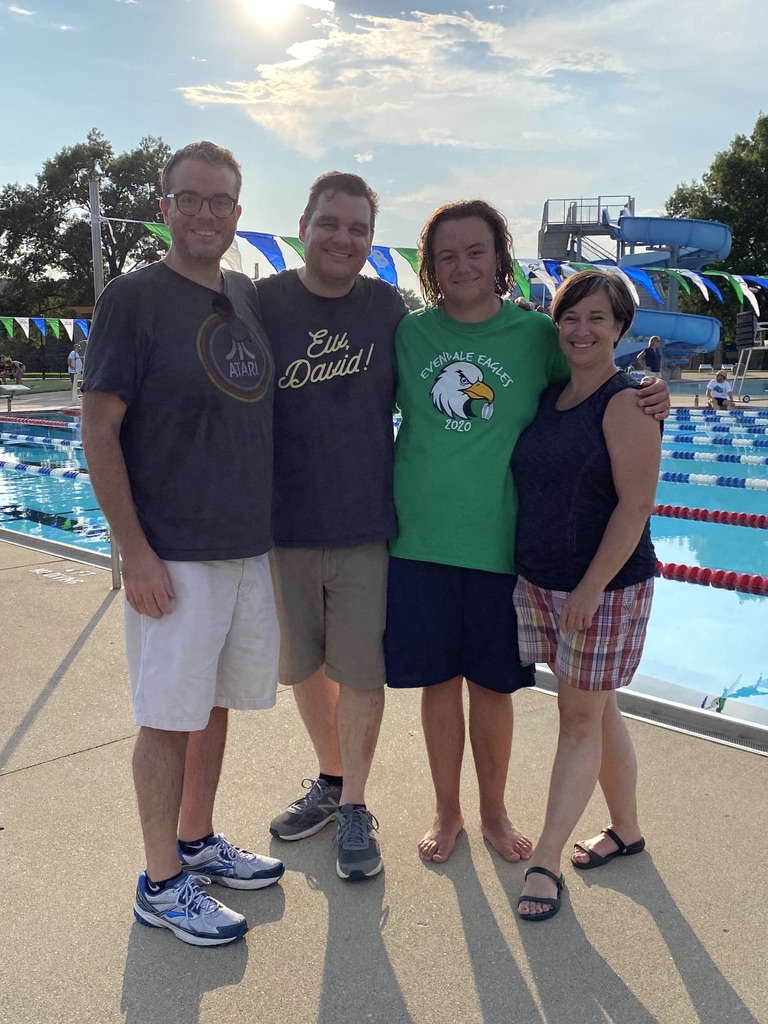
After
the Swim Meet on 7/9/2020 (photo by Carolyn Carmody)
Update
4
Date:
Monday, June 15, 2020, at 10:43 PM
Dear
Family and Friends,
In
our last update we said we were going to be watching for side-effects from the
medication. I just began my fourth week of treatment and the medication seems
to be treating me well, I've exhibited no side effects.
However,
last week was really rough for a different reason: I had lots of coughing and
shortness of breath. I tried to get through the week but by Friday I couldn't
get up the stairs at work without closing myself off in my office for 30
seconds to cough and hack and catch my breath. Dr Riaz sent me in for a chest
x-ray which revealed another effusion. I was admitted to the hospital that
night, and underwent thoracentesis to remove another 2.5 L of fluid from around
my right lung on Saturday. Thankfully the procedure had no complications and I
was discharged Sun.
There
were almost 7 weeks between the two thoracentesis procedures, and the first 4
weeks were before I started treatment while we were waiting for the testing to
be completed. So, it isn't entirely unexpected that the fluid would re-accumulate
in that amount of time. We are hoping that the medication will start to shrink
the tumors and that the fluid won't return.
In
two weeks we are traveling to Stanford to meet with Dr. Heather Wakelee, whom
Dr. Riaz described as excellent, and a thought leader. He is excited for us to
meet with her, and then we'll follow up with him later in the week. After we
return home I meet with the Interventional Pulmonary clinic at UC who will
monitor my lungs and make a plan should the fluid continue accumulating.
For
the moment I’m breathing well again, I’m trying to keep moving, and as always,
doing my best to stay positive.
With
love and gratitude,
Matt
and Steven
Update
3
Date:
Sunday, May 24, 2020 11:05 PM
Dear
Family and Friends,
After
what seemed like an endless wait, on Thursday evening we received the final
molecular analysis from Matt’s biopsy. We had discovered the previous week that
tumor cells have a high expression of PD-L1, which meant that he would not need
platinum-based chemotherapy. The final report also identified that a “driver
mutation” (specifically V600E in the BRAF gene). This is a relatively rare
mutation that is found in about 1-2% of patients with non-small cell lung
cancer.
Fortunately,
in 2017 the FDA approved a new combination drug therapy that targets this
specific gene mutation. The medications, dabrafenib (Tafinlar) and trametinib
(Mekinist), are taken orally, so Matt won’t need to undergo infusion
treatments. These medications are very new, and the overall outcomes are still
being studied. One challenge is that there can be extensive side effects that
make some patients unable to continue treatment. We are hopeful that Matt’s age
and otherwise good health will help him tolerate the regimen well. This
treatment is by no means a “cure,” but the hope is that it can delay
progression of the disease.
We
will be meeting with Matt’s oncologist this week to discuss the plan of care
and overall prognosis. Because this mutation is so uncommon, the outcomes are
difficult to predict. The first rule for patients is to avoid Google searches
of symptoms and diagnoses. However, we’ve never been the best at following
instructions. The latest data from this drug regimen show that about one-third
of patients survive to 5 years (if interested, the study is available from the New England Journal
of Medicine).
We hope that Dr. Riaz will be able to provide more information and put these
findings into context later this week.
After
receiving the pathology report Thursday evening, Friday was a blur of activity.
The team at the University of Cincinnati Specialty Pharmacy leapt into action
to help Matt get the medications before the start of the long weekend. They
worked quickly with Matt’s insurance company to get the medications approved
and shipped out that afternoon. They arrived Saturday morning, and he was able
to start treatment right away.
We
are so grateful to have your love and support, and all of the well wishes.
While we haven’t been able to respond to all of them yet, your messages have
brightened our spirits during a scary and uncertain time.
With
love and gratitude,
Matt
and Steven
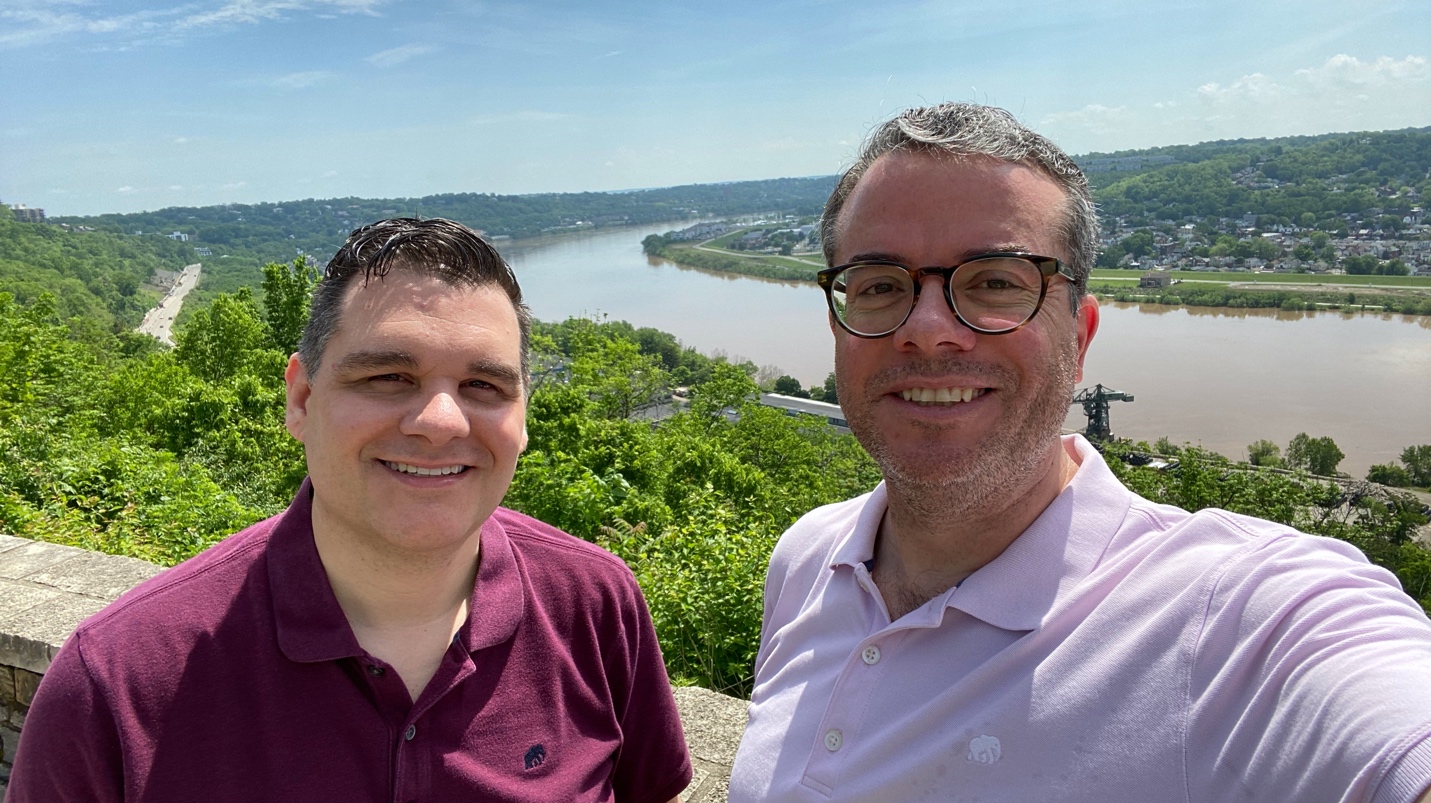
Treatment
day 2, with post Corona haircuts!
Update
2
Date:
Thursday, May 7, 2020 8:14 PM
Today
we met my oncologist, Dr. Riaz, by video chat. He practices at University of
Cincinnati and specializes in head and neck and lung cancers. We really liked
him, and Steven knows him from residency.
Dr.
Riaz went through the various treatment options, which are entirely dependent
on the reason that the cancerous cells are malfunctioning. He explained that
all cancer cells divide and reproduce uncontrollably, but that there are a
number of different causes. The biopsy that was performed on 5/1/2020 was
processed by UC Pathology and sent to a specialty lab in Arizona for testing.
Full analysis won't be complete for at least 10 days. Therefore, the treatment
plan is still a few days away. In the
meantime, he is encouraging me to keep moving, eating well, and paying close
attention to symptoms. Healthy and strong patients tolerate treatment better,
regardless of the type of treatment.
Overall,
Dr. Riaz was somewhat optimistic. He felt that it is a good sign that the
pleural effusion (fluid) has not returned yet, and that my age, non-smoking
status, and good health are working in my favor.
Dr.
Riaz outlined three scenarios for treatment based on the lab analysis.
Driver
mutations prevent the normal cell replication checkpoints from functioning
correctly, which results in uncontrolled division of cells. For some mutations
there are specific “targeted therapies” (typically oral medication). This would
be taken indefinitely to continually target those cancer cells. Of non-smokers,
about 25-30% of patients have cancers linked to these driver mutations.
If
a driver mutation is not present, the cells could exhibit high PD-L1
expression. This receptor is how the immune system targets cancerous cells.
Treatment for high PD-L1 cells is an immunotherapy drug (you might have heard
ads for Keytruda, which is one type). This would be delivered via infusion every
three weeks for at least two years. Approximately 25% of patients have high
PD-L1 expression.
If
neither a driver mutation or high PDL-1 expression are present, the standard
treatment is a combination of chemotherapy and immunotherapy. The most likely regimen
would be carboplatin and pemetrexed as the chemotherapy agents, and
pembrolizumab (Keytruda) for immunotherapy. Dr. Riaz reports that this regimen
is generally well tolerated for patients.
I
won't lie, these past few days were pretty gloomy. Because cancerous cells were
found in the pleural fluid and lymph nodes, it is considered stage IV
metastatic cancer. While there will be difficult times ahead, there is reason
to be cautiously optimistic today. Thank you for all of your emails and kind
words. They have lifted our spirits and helped us cope with a very difficult
week.
With
love and gratitude,
Matt
and Steven
Update
1
Date:
Saturday, May 02, 2020 11:14 PM
Dear Family and Friends,
We have some unexpected and sad news to share. Under ideal
circumstances we would not be sharing this news by email, but we felt that
getting information to you quickly was paramount.
Last week Matt started to have some shortness of breath and a
cough. Given the current Coronavirus outbreak, his PCP sent him for an x-ray on
Monday, which revealed a plural effusion (fluid collection) in his right lung.
Matt was admitted to University of Cincinnati Medical Center on
Monday evening. The effusion was drained on Tuesday, and he felt much better.
However, the analysis of the fluid was concerning. He underwent a CT scan,
which showed nodules in his lung and enlarged lymph nodes. Early Friday morning
Matt had a lymph node biopsy performed via bronchoscopy, which unfortunately
revealed malignant cells consistent with non-small cell lung cancer. Because
these cells were also found in the pleural fluid, it is considered advanced
stage, and surgical management is not an option.
Matt was discharged from the hospital on Friday afternoon, and
is doing very well at home. He isn't having any pain, and the only symptom he
is having now is a mild cough from the bronchoscopy procedure.
We are currently waiting for genetic analysis of cells from the
biopsy, which takes several days to complete. Hopefully this will reveal a
genetic mutation that could be managed with targeted therapy. We are hopeful
that he will respond well to treatment, especially given his young age and
otherwise excellent health.
While we greatly appreciate all of your well wishes and support,
we are still in a bit of shock over the diagnosis. As you can imagine, this has
been an exhausting and emotionally draining time for us. We ask for some space
and quiet time to work through our thoughts and plan the next steps. We will
send updates as we get more information. If you'd like to send thoughts or
wishes, please email them to mg@gardnernetwork.com.
With love and gratitude,
Matt and Steven